



Is coal making a comeback in the MENA region?
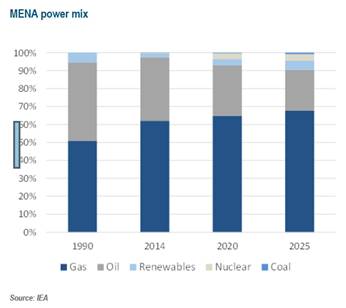
The surprising rise of coal in the Middle East and North Africa (MENA) region. The demand for coal, which is carbon-intensive but cheap, is increasing in a region with almost no coal of its own. Morocco still depends on coal for much of its power generation. Egypt, is planning to build a number of large-scale coal-fired power plants with Chinese investors. Dubai, and Turkey are turning to coal and the construction of a first coal-fired power plant is in progress in the United Arab Emirates (UAE). Jordan, whose energy strategy targets 5% of power generation through coal by 2025, recently signed a deal for a small coal-fired plant.
Coal continues to be the dominant fuel in the global power mix. As of 2014, its share represented 41%, whereas gas and renewables amounted to 22% and 6%. This is an increase compared to the year 2000, when coal stood at 39%, and gas and renewables at 18% and 2%. However, the general forecast is that as the global community substitutes coal with gas and renewable energy to meet its climate change commitments, a downward trend of the share of coal in electricity generation will ensue.
The future of coal in the MENA region’s power mix. Without a price on carbon – regional or global – coal looks misleadingly cheap compared to cleaner sources. The growth in demand for electricity in the region and the resulting strain on existing capacity has encouraged governments to include the fuel in the power mix. However, its environmental negatives need to be properly accounted for in further developing a long-term policy for this fuel. The new coal-fired plants to be built in the region will undoubtedly be fitted with modern pollution controls, but they will still produce large quantities of carbon dioxide, working against the region’s efforts to cut emissions.
Resources: The future of coal in the MENA power mix | Key Conclusions of Africa Carbon Forum 2017 | IEA Coal Overview 2017 | Coal data by Region - World Energy Council |